







Have you ever needed one week car insurance for a short trip, a borrowed vehicle, or a temporary driving situation? If so, you’re not alone. Many drivers don’t need a full six-month or one-year insurance policy and instead look for flexible short-term coverage.
The good news is that one week car insurance may be available through certain insurance providers or temporary coverage options. However, availability depends on your location, insurer, and individual circumstances.
In this guide, you’ll learn how one-week car insurance works, who needs it, its benefits, and the best alternatives if a one-week policy isn’t available.
Want to learn more? Read our complete guide on Can I Insure a Car Not in My Name? Ultimate Guide (2026)
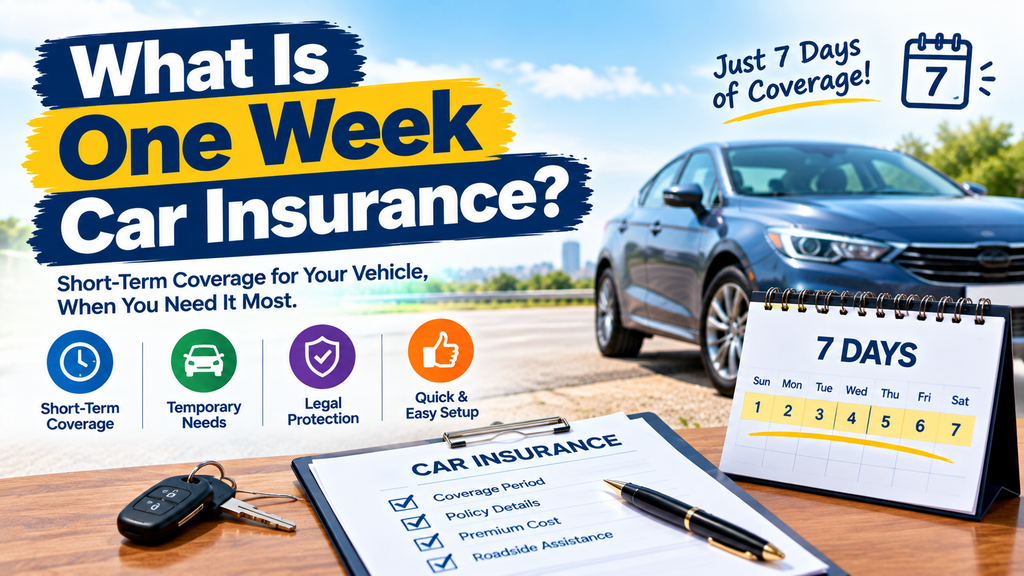
What Is One Week Car Insurance?
One week car insurance is a type of temporary auto insurance designed to provide coverage for a short period, usually seven consecutive days. It offers many of the same protections as a standard policy but only for the time you actually need.
Instead of paying for months of coverage, drivers can purchase temporary insurance that matches their short-term driving needs.
Depending on the insurer, a one-week policy may include:
- Liability coverage
- Collision coverage
- Comprehensive coverage
- Uninsured/underinsured motorist protection
- Roadside assistance (optional)
Not every insurance company offers one week car insurance, so comparing providers is essential.
Who Needs One Week Car Insurance?
Temporary coverage is useful in many situations. Here are the most common reasons people search for one week car insurance.
Borrowing a Friend’s or Family Member’s Car
If you’re borrowing a vehicle for several days, temporary insurance can provide additional protection without purchasing a long-term policy.
Why It Helps
- Protects you while driving someone else’s vehicle.
- May prevent claims from affecting the owner’s insurance.
- Offers peace of mind during short-term use.
Taking a Road Trip
Many drivers purchase one week car insurance before going on vacation or taking a long-distance road trip.
Temporary coverage ensures you’re protected throughout your journey without committing to an annual policy.
Test Driving or Buying a Used Car
If you’re purchasing a used vehicle, you may only need insurance until you complete the registration process.
A temporary policy can bridge the gap between buying the vehicle and arranging permanent coverage.

Students Returning Home
College students often drive only during holidays or semester breaks.
Instead of paying for year-round insurance, some students explore one week car insurance to save money while remaining legally covered.
How Does One Week Car Insurance Work?
Although the process varies by insurer, obtaining one week car insurance is usually simple.
Step 1: Request a Quote
Provide basic information such as:
- Your age
- Driving history
- Vehicle information
- ZIP code
- Coverage requirements
Step 2: Choose Your Coverage
Select the level of protection that matches your needs and budget.
Step 3: Pay for the Policy
Once approved, you’ll pay the premium for the temporary coverage period.
Step 4: Receive Proof of Insurance
Most insurers send digital proof of insurance immediately after payment, allowing you to drive legally.
Benefits of One Week Car Insurance
Choosing one week car insurance offers several advantages over purchasing a long-term policy.
Flexible Coverage
You only pay for the time you actually need.
Lower Overall Cost
For temporary driving situations, short-term coverage may cost less than maintaining a full policy.
Fast Approval
Many insurers provide quotes and policy documents online within minutes.
Ideal for Temporary Drivers
Whether you’re borrowing a vehicle, traveling, or waiting for permanent insurance, temporary coverage provides a practical solution.

Is One Week Car Insurance Available in the United States?
One of the biggest questions drivers ask is whether one week car insurance is actually available in the United States.
The answer is it depends. Most traditional U.S. insurance companies do not sell true standalone seven-day policies. Instead, they usually offer standard six-month or twelve-month policies. However, some insurers and temporary coverage providers offer flexible short-term solutions that can work for drivers who only need coverage for a week.
Before purchasing a policy, always compare providers to see whether temporary coverage is available in your state.
What Does One Week Car Insurance Cover?
The exact coverage depends on the insurance company and the policy you choose. In many cases, one week car insurance can include the same protections found in a standard auto insurance policy.
Liability Coverage
Liability insurance helps pay for injuries or property damage you cause to others if you’re responsible for an accident. Most states require drivers to carry at least the minimum liability coverage.
Why It’s Important
- Pays for third-party damages.
- Helps meet state insurance requirements.
- Protects your finances after an accident.
Collision Coverage
Collision coverage pays for damage to your own vehicle after an accident, regardless of who caused it.
This coverage is especially valuable if you’re driving a newer or more expensive vehicle.
Comprehensive Coverage
Comprehensive insurance protects against non-collision events, such as:
- Theft
- Fire
- Vandalism
- Falling objects
- Storm damage
- Animal collisions
Adding comprehensive coverage provides greater peace of mind during your temporary driving period.
Uninsured and Underinsured Motorist Coverage
If another driver causes an accident and doesn’t have enough insurance, this coverage may help pay your medical expenses and other losses.
Not every insurer automatically includes this protection, so check your policy carefully.
How Much Does One Week Car Insurance Cost?
The cost of one week car insurance varies depending on several factors.
Insurance companies typically consider:
Your Age
Younger drivers generally pay higher premiums because they’re considered higher risk.
Driving Record
Drivers with clean records often qualify for lower insurance rates than those with accidents or traffic violations.
Vehicle Type
Luxury cars, sports cars, and high-value vehicles usually cost more to insure than standard family vehicles.
Location
Insurance prices vary by state, city, and ZIP code due to accident rates, theft statistics, and local insurance laws.
Coverage Level
Basic liability coverage costs less than a policy that includes collision and comprehensive protection.
Advantages of One Week Car Insurance
Choosing one week car insurance can provide several benefits for temporary drivers.
You Only Pay for Short-Term Coverage
Instead of committing to an annual policy, you may only pay for the time you actually need.
Fast Online Quotes
Many providers allow you to compare quotes, purchase coverage, and receive proof of insurance online within minutes.
Flexible Driving Solution
Temporary coverage is ideal for:
- Borrowing a family member’s car.
- Driving during a vacation.
- Moving to a new home.
- Waiting for a permanent insurance policy.
- Short-term business travel.
Disadvantages to Consider
While one week car insurance offers flexibility, it isn’t always the perfect solution.
Some insurance companies don’t provide true seven-day policies, meaning you may need to purchase a standard policy and cancel it early or consider alternatives such as non-owner insurance, depending on your situation.
Best Alternatives to One Week Car Insurance
If you can’t find one week car insurance in your state, don’t worry. There are several alternatives that can provide temporary protection depending on your situation. In the U.S., true standalone 7-day policies are uncommon, so these options are often more practical.
Be Added as a Named Driver
If you’re borrowing a family member’s or friend’s vehicle, ask them to add you as a named driver on their existing policy.
Benefits
- Usually more affordable.
- Easy to arrange.
- Suitable for short-term vehicle use.
- Helps ensure you’re legally covered.
Purchase a Non-Owner Car Insurance Policy
If you frequently borrow different vehicles, a non-owner policy may be a better solution than searching for one week car insurance.
This type of policy generally includes liability coverage but doesn’t insure damage to the vehicle you’re driving.
Rental Car Insurance
If you’re renting a vehicle, you may not need one week car insurance. Rental companies usually offer temporary insurance options when you pick up the vehicle.
Before purchasing extra coverage, check whether your personal auto insurance or credit card already includes rental protection.
Common Mistakes to Avoid
Many drivers make avoidable mistakes when looking for one week car insurance.
Assuming Every Company Offers It
Not all insurers provide true seven-day policies. Always verify what’s available before making plans.
Buying More Coverage Than You Need
Review your situation carefully and select coverage that fits your driving needs and budget.
Ignoring Policy Exclusions
Read the policy details carefully so you understand what’s covered and what isn’t.
Comparing Only Price
The cheapest policy isn’t always the best. Compare:
- Coverage limits
- Deductibles
- Customer reviews
- Claims process
- Financial strength
How to Choose the Right One Week Car Insurance
Finding the right one week car insurance policy requires more than simply comparing prices. You should evaluate the coverage, policy terms, and insurer’s reputation before making a decision.
Compare Coverage Options
Not every temporary policy includes the same level of protection. Some policies only provide liability coverage, while others also include collision and comprehensive insurance.
Before purchasing one week car insurance, check whether the policy includes:
- Liability coverage
- Collision coverage
- Comprehensive coverage
- Roadside assistance
- Rental reimbursement
- Uninsured motorist protection
Choosing the right level of protection can help you avoid unexpected expenses if an accident occurs.
Check Eligibility Requirements
Insurance companies have different eligibility rules for temporary coverage.
You may need to meet requirements such as:
- Holding a valid driver’s license.
- Meeting the minimum age requirement.
- Having a clean driving record.
- Providing vehicle registration details.
- Supplying accurate personal information.
Checking these requirements in advance can speed up the approval process.
Read the Policy Carefully
Before buying one week car insurance, always review the policy documents.
Pay close attention to:
- Coverage limits
- Deductibles
- Exclusions
- Cancellation policy
- Claims process
Understanding these details helps prevent surprises if you ever need to file a claim.
Can You Extend One Week Car Insurance?
Sometimes your plans change, and you may need coverage for longer than expected.
Some temporary insurance providers allow you to extend your policy or purchase another short-term policy, while others require you to buy a standard six-month policy instead. Availability depends on the insurer and your location.
If you expect to drive regularly after the first week, switching to a long-term policy is often the more cost-effective option.
Is One Week Car Insurance Worth It?
Whether one week car insurance is worth buying depends on your circumstances.
It can be an excellent option if you:
- Need a vehicle for only a few days.
- Are borrowing a friend’s or family member’s car.
- Want temporary protection while arranging permanent insurance.
- Need coverage for a road trip or business travel.
However, if you’ll be driving for several months, a standard auto insurance policy usually offers better value. Major U.S. insurers generally don’t sell true 7-day policies, so compare the available temporary options carefully.
Expert Tips for Saving Money
Here are a few simple ways to reduce the cost of one week car insurance:
- Compare quotes from multiple insurance providers.
- Select only the coverage you actually need.
- Maintain a clean driving record.
- Ask whether discounts are available.
- Avoid unnecessary optional add-ons.
Even if you only need insurance for one week, spending a few minutes comparing policies can help you find better coverage at a lower price.

Final Thoughts
One week car insurance can be a practical solution if you only need coverage for a few days. While many traditional U.S. insurers don’t sell true 7-day policies, temporary coverage options, named-driver arrangements, or non-owner insurance can often meet the same need.
Before purchasing any policy, compare multiple providers, understand exactly what is covered, and choose the option that best fits your situation. A little research today can help you avoid unnecessary costs and ensure you’re properly protected on the road.
For more information about one week car insurance, check out our complete guide on Weekly Car Insurance
Frequently Asked Questions
Is one week car insurance available everywhere?
No. Availability depends on your state and the insurance company. Many insurers offer alternatives instead of a true seven-day policy.
Can I get same-day coverage?
Yes. Many providers can issue proof of insurance within minutes after your application is approved.
Does one week car insurance include full coverage?
It depends on the insurer. Some temporary policies can include liability, collision, and comprehensive coverage, while others offer only basic protection.
Is temporary insurance cheaper than an annual policy?
For short-term needs, it can be more cost-effective because you’re paying only for the period you need, although availability and pricing vary.
Who should consider one week car insurance?
It’s often suitable for drivers who are borrowing a vehicle, taking a road trip, waiting for permanent insurance, or needing temporary coverage for a specific situation.
