






Commercial Dump Truck Insurance Running a dump truck business comes with significant responsibilities, and protecting your investment should be a top priority. Whether you own one truck or manage an entire fleet, dump truck insurance helps protect your business from financial losses caused by accidents, property damage, theft, and liability claims.
Moreover, construction companies, excavation contractors, landscapers, and hauling businesses depend on dump trucks every day. Because these vehicles carry heavy loads and operate in high-risk environments, insurance companies consider them riskier than ordinary commercial vehicles. Therefore, choosing the right truck insurance policy is essential to protect your business and reduce financial risks.
In addition, this guide explains everything you need to know about commercial dump truck insurance, including coverage options, costs, factors affecting premiums, and practical tips for finding the best policy in 2026. As a result, you will be better prepared to choose coverage that fits your business needs and budget.
What Is Commercial Dump Truck Insurance?
Commercial dump truck insurance is a specialized commercial auto insurance policy designed to protect dump truck owners, operators, and trucking businesses against financial risks.
Unlike personal auto insurance, this type of policy is specifically created for businesses that use dump trucks for commercial purposes.
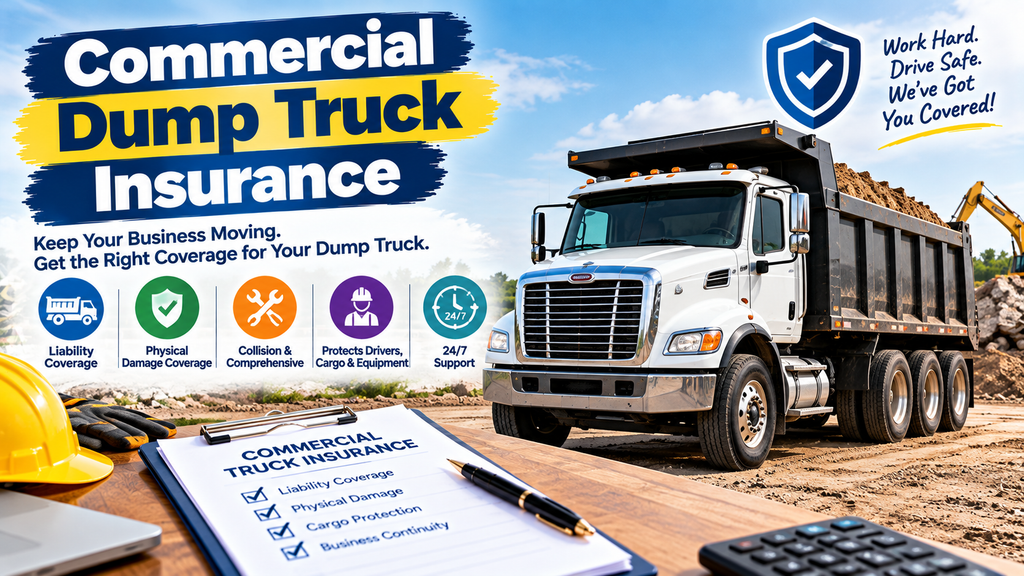
A standard commercial dump truck policy may include:
- Liability coverage
- Physical damage coverage
- Collision coverage
- Comprehensive coverage
- Medical payments
- Uninsured/underinsured motorist coverage
- Cargo protection (when applicable)
Every trucking business has different insurance needs, so coverage can be customized based on the vehicle, cargo, and daily operations.
Who Needs Commercial Dump Truck Insurance?
Almost every business that operates a dump truck should carry commercial dump truck insurance.
Businesses that commonly require this coverage include:
- Construction companies
- Excavation contractors
- Road construction businesses
- Landscaping companies
- Sand and gravel suppliers
- Demolition contractors
- Asphalt companies
- Independent dump truck owner-operators
Even if you own a single truck, insurance helps protect your business from expensive lawsuits and unexpected repair costs.
Why Is Commercial Dump Truck Insurance Important?
Operating a dump truck involves higher risks than driving a standard commercial vehicle.
Large trucks:
- Carry heavy materials.
- Travel through construction zones.
- Operate on uneven roads.
- Can cause costly property damage.
- May be involved in serious accidents.
Without commercial dump truck insurance, one major accident could result in thousands—or even hundreds of thousands—of dollars in expenses.
Insurance provides financial protection while helping your business continue operating after unexpected incidents.
Types of Coverage Included
Choosing the right dump truck insurance policy starts with understanding the available coverage options.
Liability Insurance
Liability coverage is the foundation of every commercial truck insurance policy.
It helps pay for:
- Property damage
- Bodily injury
- Legal expenses
- Court settlements
If your dump truck causes an accident, liability insurance can prevent your business from facing devastating financial losses.

Why Liability Coverage Matters
Many states require commercial trucking businesses to carry minimum liability insurance limits.
Higher coverage limits often provide better protection, especially for businesses operating heavy-duty dump trucks.
Collision Coverage
Collision insurance pays for damage to your dump truck after an accident, regardless of who caused it.
This coverage may help pay for:
- Truck repairs
- Vehicle replacement
- Accident-related damage
Because dump trucks are expensive to repair, collision coverage is one of the most valuable parts of commercial dump truck insurance.
Comprehensive Coverage
Comprehensive insurance protects your truck against non-collision events.
Examples include:
- Theft
- Fire
- Flood
- Hail
- Falling objects
- Vandalism
- Animal collisions
Businesses that leave dump trucks parked at construction sites overnight often benefit from comprehensive coverage.
How Commercial Dump Truck Insurance Protects Your Business
Accidents happen even to experienced drivers. However, having commercial dump truck insurance allows your business to recover faster after unexpected events.
Instead of paying large repair bills or legal settlements out of pocket, your insurance company may cover eligible expenses according to your policy limits. As a result, your business can avoid major financial stress after an accident.
Furthermore, this protection allows business owners to focus on completing projects instead of worrying about financial setbacks. Overall, the right insurance policy provides greater financial security and peace of mind.
Additional Coverage Options
A standard commercial dump truck insurance policy can be expanded with additional protection based on your business needs. These optional coverages help reduce financial risks and keep your operations running smoothly.
General Liability Insurance
General liability insurance protects your business against claims that are not directly related to driving your dump truck.
It may help cover:
- Property damage at a job site
- Customer injuries
- Legal defense costs
- Settlement expenses
Many contractors require proof of general liability insurance before allowing dump truck operators to work on construction projects.
Medical Payments Coverage
Medical payments coverage helps pay medical expenses for you or your passengers after an accident, regardless of who was at fault.
This coverage may include:
- Emergency treatment
- Hospital bills
- Ambulance costs
- Follow-up medical care
Adding this option to your commercial dump truck insurance policy provides extra financial protection for drivers and passengers.
Uninsured and Underinsured Motorist Coverage
Unfortunately, not every driver carries enough insurance.
If your dump truck is involved in an accident caused by an uninsured or underinsured driver, this coverage may help pay for:
- Medical expenses
- Vehicle repairs
- Other covered losses
Without this protection, your business could face significant out-of-pocket costs.

Physical Damage Coverage
Physical damage coverage combines collision and comprehensive insurance to protect your dump truck against many different risks.
This coverage helps pay for repairs or replacement if your truck is damaged by:
- Accidents
- Theft
- Fire
- Floods
- Vandalism
- Severe weather
Because dump trucks represent a major investment, physical damage coverage is highly recommended.
How Much Does Commercial Dump Truck Insurance Cost?
The cost of commercial dump truck insurance varies depending on several factors. In fact, there is no fixed price because every trucking business has different risks and coverage requirements.
For example, some businesses may pay only a few thousand dollars per year, while larger fleets or higher-risk operations may pay considerably more. Therefore, requesting quotes from multiple insurers is the best way to estimate your premium. This way, you can compare coverage options and choose a policy that offers the best value for your business.
Factors That Affect Insurance Costs
Insurance companies evaluate several factors before calculating your premium.
Driver Experience
Experienced drivers with clean driving records usually receive lower insurance rates than new drivers or those with multiple traffic violations.
Truck Value
Newer and more expensive dump trucks generally cost more to insure because repair and replacement costs are higher.
Business Location
Insurance premiums differ depending on where your business operates.
Companies working in busy cities or high-traffic construction areas may pay more because accident risks are higher.
Annual Mileage
The more miles your dump truck travels each year, the greater the chance of an accident.
Businesses with lower annual mileage often qualify for lower premiums.
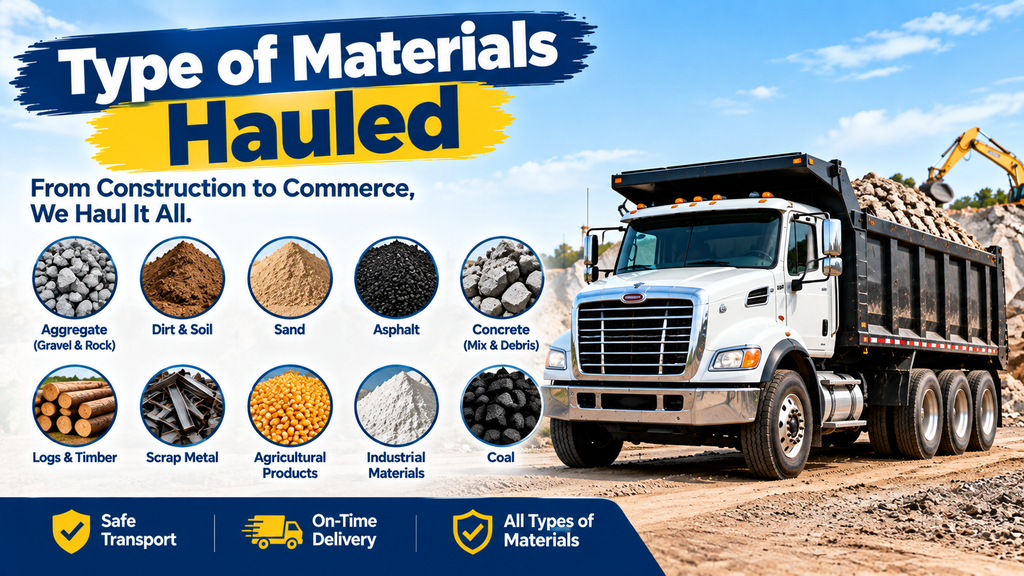
Type of Materials Hauled
The type of cargo also affects insurance costs.
For example, hauling:
- Sand
- Gravel
- Asphalt
- Demolition debris
- Heavy construction materials
may increase risk depending on weight and operating conditions.
Coverage Limits
Higher coverage limits provide greater financial protection but usually result in higher premiums.
Business owners should choose coverage that balances protection with affordability.
How to Save Money on Commercial Dump Truck Insurance
Although commercial dump truck insurance can be expensive, there are several ways to reduce your premium without sacrificing important coverage.
Compare Multiple Quotes
Never purchase the first policy you receive.
Comparing quotes from different insurance companies can help you find better coverage at a competitive price.
Maintain a Clean Driving Record
Safe drivers often qualify for discounts and lower insurance rates. In fact, maintaining a clean driving record is one of the most effective ways to reduce insurance costs.
Additionally, avoiding accidents and traffic violations can significantly reduce long-term insurance costs. As a result, your business may qualify for better premiums and additional policy discounts over time.
Increase Your Deductible
Choosing a higher deductible may lower your monthly or annual premium. However, you should always balance lower premiums with your financial situation.
Therefore, make sure your business can comfortably afford the deductible if a claim occurs. Otherwise, paying out of pocket could create unnecessary financial pressure. In the long run, choosing the right deductible can help you manage both insurance costs and business expenses more effectively.
Bundle Insurance Policies
Many insurers offer discounts when you purchase multiple business insurance policies together.
For example:
- Commercial auto insurance
- General liability insurance
- Workers’ compensation
- Commercial property insurance
Bundling policies may reduce your overall insurance expenses.
Best Commercial Dump Truck Insurance Companies
Choosing the right insurer is just as important as selecting the right coverage. In addition, several insurance companies offer commercial dump truck insurance for owner-operators, contractors, and trucking businesses. Moreover, many insurers allow you to customize your policy based on the size of your business and the type of materials you haul. As a result, you can choose coverage that better matches your operational needs and budget.
Progressive Commercial
Progressive Commercial is a popular choice for dump truck owners because it offers customizable commercial truck insurance policies.
Key benefits include:
- Flexible coverage options
- 24/7 claims support
- Policies for owner-operators and fleets
- Optional physical damage coverage
GEICO Commercial
GEICO Commercial provides insurance solutions for businesses that use dump trucks in industries such as construction, landscaping, and debris hauling.
Policyholders can customize coverage based on their business needs and state requirements.

Compare Multiple Insurance Providers
Every insurer uses different underwriting guidelines. Comparing quotes from several companies helps you find the best combination of:
- Coverage
- Price
- Deductibles
- Customer service
- Claims handling
Getting at least three quotes before buying commercial dump truck insurance is a smart way to save money.
How to Choose the Right Commercial Dump Truck Insurance
Not every business requires the same insurance policy. Before purchasing commercial dump truck insurance, evaluate your business carefully.
Understand Your Business Needs
Ask yourself:
- How many dump trucks do you own?
- Do you operate locally or across state lines?
- Do you employ multiple drivers?
- What materials do you haul?
- Is your truck financed or leased?
Your answers will help determine the type and amount of coverage you need.
Review Coverage Limits
Choosing the cheapest policy isn’t always the best option.
A higher liability limit may provide better protection if your business is involved in a serious accident or lawsuit.
Check the Insurance Company’s Reputation
Before purchasing a policy, research the insurer’s:
- Customer reviews
- Financial stability
- Claims process
- Industry experience
A reliable insurance company can make the claims process much smoother when unexpected events occur.
Common Mistakes to Avoid
Many business owners make costly mistakes when buying truck insurance.
Buying Only the Minimum Coverage
Minimum liability insurance may satisfy legal requirements, but it may not provide enough protection for expensive lawsuits or major accidents.
Not Updating the Policy
If you purchase another dump truck, hire additional drivers, or expand your business, update your insurance policy immediately.
Outdated information may affect your coverage during a claim.
Ignoring Policy Exclusions
Always read the policy carefully. For example, some policies may exclude certain jobsite operations, overloaded vehicles, or specialized hauling unless additional endorsements are added. Therefore, understanding these exclusions before buying a policy helps prevent claim disputes. In addition, reviewing your policy in detail ensures you know exactly what is and is not covered.
Tips for Choosing the Best Commercial Dump Truck Insurance
Buying commercial dump truck insurance isn’t just about finding the lowest premium. Instead, the right policy should protect your business, employees, equipment, and financial future. Moreover, choosing comprehensive coverage can help reduce unexpected financial losses. Ultimately, investing in the right insurance policy provides long-term security and peace of mind for your business.
Compare Multiple Quotes
Insurance rates vary from one company to another. Comparing quotes from at least three insurers helps you find the best balance between price and coverage. Many experts recommend shopping around instead of accepting the first quote you receive.
Choose Adequate Liability Limits
Although minimum liability coverage may satisfy legal requirements, many contractors and commercial clients require higher limits before awarding contracts. Furthermore, higher coverage limits can improve your credibility when bidding for larger projects.
Additionally, higher limits can provide better protection if your business faces a serious lawsuit after an accident. As a result, your company is less likely to face significant financial losses or unexpected legal expenses.
Understand Policy Exclusions
Before purchasing commercial dump truck insurance, read the policy carefully.
Some policies may exclude:
- Off-road operations
- Overloaded vehicles
- Certain materials being transported
- Unapproved drivers
- Intentional damage
Knowing these exclusions helps avoid claim disputes later.
Maintain a Strong Safety Program
Insurance companies often reward businesses that demonstrate good safety practices.
Consider:
- Driver safety training
- Regular vehicle inspections
- Dash cameras
- GPS tracking
- Preventive maintenance schedules
A strong safety record may help reduce future insurance premiums.
Filing a Commercial Dump Truck Insurance Claim
If an accident occurs, taking the right steps can make the claims process easier.
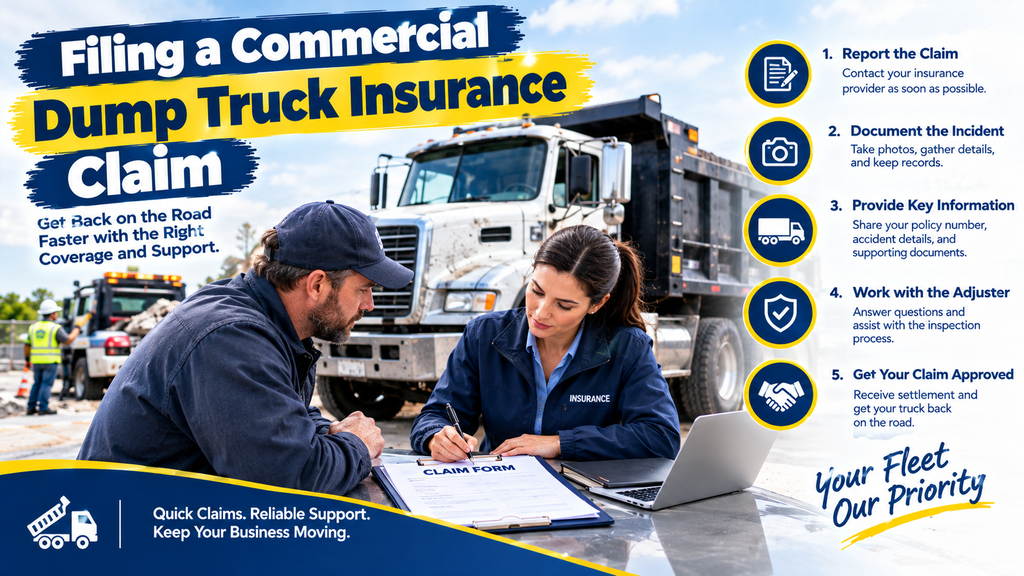
Step 1: Ensure Safety
Move to a safe location if possible and check whether anyone has been injured. Contact emergency services if necessary.
Step 2: Document the Scene
Take clear photos of:
- Vehicle damage
- Road conditions
- Other vehicles involved
- License plates
- The accident scene
Also collect contact and insurance information from the other driver.
Step 3: Notify Your Insurance Company
Report the accident as soon as possible. Most insurers have 24/7 claims support and can explain the next steps.
Step 4: Cooperate During the Investigation
Provide accurate information and any requested documents so your claim can be processed more efficiently.
Future Trends in Commercial Dump Truck Insurance
The commercial trucking industry continues to evolve, and truck insurance is changing with it.
Some emerging trends include:
- Usage-based insurance programs
- Telematics and GPS monitoring
- Digital policy management
- Faster online claims processing
- Fleet safety discounts
Businesses that invest in safety technology may qualify for better pricing and additional discounts from some insurers.
Expert Recommendations
Before buying commercial dump truck insurance, keep these best practices in mind:
- Compare several insurance providers.
- Select coverage based on your business risks—not just price.
- Review your policy every year.
- Update your insurer when adding trucks or drivers.
- Maintain detailed maintenance and safety records.
- Ask about available discounts for fleets or bundled policies.
Taking these steps can help you protect your business while controlling long-term insurance costs.

Final Thoughts
An essential investment for anyone operating a dump truck business. Ultimately, the right policy can protect your vehicles, employees, equipment, and finances from costly accidents, lawsuits, and unexpected losses.
Before choosing a policy, compare multiple insurance providers and review your coverage options carefully. In addition, select coverage limits that match your business needs. By doing so, you can better protect your company from unexpected financial risks. Finally, a well-designed insurance plan not only keeps your business compliant but also provides peace of mind while you focus on growing your operation.
Frequently Asked Questions
Is commercial dump truck insurance required?
Yes. In most states, commercial dump trucks must carry at least the required commercial auto liability insurance before operating legally. Interstate operators may also need to meet federal insurance requirements.
How much does dump truck insurance cost?
The cost depends on factors such as your driving history, truck value, location, coverage limits, business operations, and the number of vehicles insured.
Does commercial dump truck insurance cover theft?
Yes. If you purchase comprehensive coverage, your policy may help pay for theft and certain other non-collision losses.
Can owner-operators buy truck insurance?
Absolutely. Many insurance companies offer customized policies specifically for independent owner-operators as well as larger fleets.
